


Why Every Modern Gym Needs a Dedicated Studio Space ?

Gyms used to sell one thing: access to equipment. That model is changing. As members got more choice, they started picking gyms not just for machines, but for the classes, community, and instructors they'd find there and that shift gave rise to the "studio" inside the modern gym: ”a dedicated room built for dance, yoga, Zumba sessions or HIIT classes instead of free weights and treadmills.”
This piece walks through why that shift matters for a gym owner specifically: the members you lose without a studio, how big and how fast this trend actually is, what it changes on your P&L, what the studio needs (space, equipment, layout) the mistakes to avoid, and whether now is the right time to build one.
Why Does a Studio Matter in Every Modern Gym?
A studio does three jobs a regular gym floor can't do on its own.
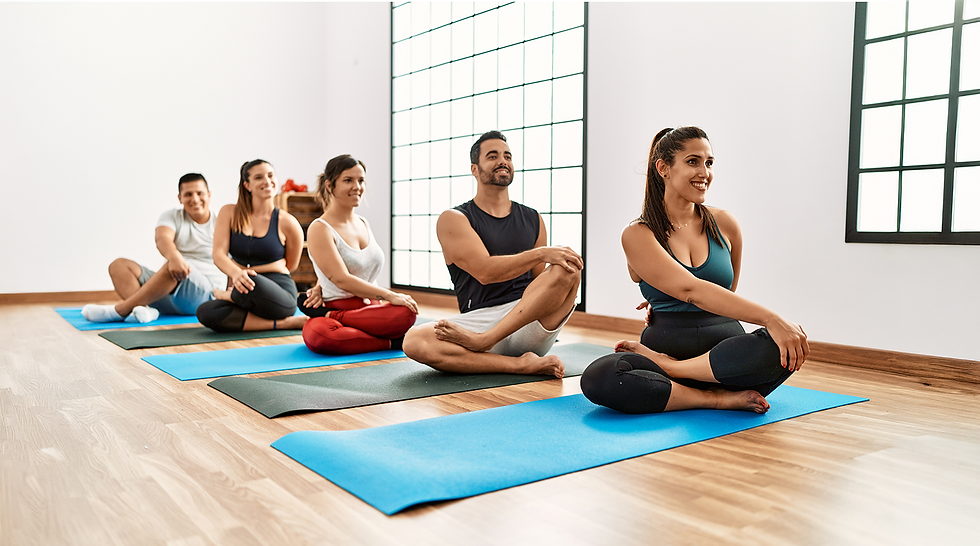
It turns walk-ins into regulars, a scheduled class gives someone a reason to come back on a fixed day, not just when they feel motivated. It gives trainers and instructors a stage: structured programming that builds a following, instead of just supervising the floor. And it gives the gym a second front door. Classes bring in people who'd never sign up for a straight gym membership, but will try a dance or HIIT class with a friend.
Put simply, a studio is what turns a gym from a place people use into a place people belong to and that difference is exactly what shows up in the member and revenue numbers below.
The Member You're Losing Without a Studio
Members aren't leaving fitness, they're leaving gyms that don't offer what they want. 58% of millennials already say they prefer boutique-style studios over traditional gym floors, and 87% of premium studio members cite community as the key reason they keep showing up, not equipment or price.
That's the member of a gym without a studio quietly hands to the independent yoga or dance studio down the road. Members who attend group fitness classes attend more often than solo lifters, 73% of group fitness participants train at least twice a week which means every member you lose to a boutique competitor is also a member who would have visited, and spent, more than once a week.
The cost compounds through referrals. Community-driven members bring friends; solo treadmill users rarely do. A gym without a studio isn't just missing a revenue line, it's missing the retention engine that keeps the rest of the floor full.
The Studio Culture Shift : Is It a Trend or Here to Stay?
This is not a passing trend “the numbers prove it”. The global boutique fitness studio market was worth about ₹4.47 lakh crore (US 75.04 billion) by 2030. That is already about 40% of the entire gym and fitness industry worldwide.
India is moving even faster on a smaller base. The India Fitness Market Report 2025 puts the commercial fitness sector at roughly ₹16,200 crore (US 4.5 billion) by 2030 more than doubling in six years.
Within that, India's premium segment studios built around a single modality like yoga, dance, or High-Intensity Interval Training (HIIT) currently holds about 7% of market value and 8% of facilities, projected to grow to 8% of value and 11% of facilities by 2030, outpacing the value-gym segment on a percentage basis. The same report notes India's fitness-facility penetration is still below 1% of the population, against a target age group of 956 million people meaning the market has room to more than double before it matures.
This isn't a Tier-1-city phenomenon either. Top-tier cities already generate 56% of industry revenue from just 42% of members, but tier-two and emerging cities remain largely untapped exactly where a well-equipped, affordable studio concept has room to move first.

What Changes on Your P&L When You Add a Studio?
A studio gives you something your regular gym floor cannot sell: class packs, drop-in rates, and specialty programs like yoga and dance classes priced higher than a standard gym membership. 82% of successful studio operators rely on recurring memberships as their primary revenue source, and 57% of studio owners plan to expand their class offerings in the next year. Both point to the same thing: once a studio is built, it tends to keep growing on its own instead of staying flat.
One honest caveat: this isn't instant payback. Independent studio benchmarks show an average break-even time of about 4.2 years, with single-location studios earning around ₹4.3 crore (US$450,000) a year globally. These are useful reference points, not hard rules; a studio built inside an existing gym usually breaks even faster than a stand-alone one, since it shares rent, staff, and members instead of carrying the full cost on its own.
For an existing gym, a studio helps the P&L in three ways:
New revenue line : class packs and studio membership tiers the main gym floor can't sell
More member visits : frequent studio-goers also spend more on supplements, apparel, and PT upsells
Cheaper new members : a studio class is an easier first step than a full gym membership, lowering the cost of bringing in first-time members
What You're Actually Signing Up For (Space, Equipment, Flow)
A studio isn't "a spare room with a mirror" treating it that way is the single most common reason new studios underperform. The baseline equipment list:
Flooring : special sprung or vinyl flooring, not the usual gym rubber mats. It's a must for dance and HIIT classes so people don't get hurt.
Mirrors : full wall mirrors help people check their form and make the room feel bigger.
Sound system: a good speaker setup just for the studio, separate from the main gym's music, with basic studio soundproofing so classes don't bleed into each other.
Lighting : lights you can adjust, so the room feels energetic for HIIT and calm for yoga.
Storage : a place to keep mats, blocks, and bands, so they don't clutter the main gym floor.
For dance-specific studios, add ballet barres and confirm the subfloor can support a proper sprung floor retrofitting this after the fact is far more expensive than specifying it upfront.
Gym Layout Planning matters as much as the equipment list. Sightlines to the mirror, a clear path in and out that doesn't cross the main gym floor during class changeovers, and zoning that lets the space handle more than one class type (so it isn't booked out for a single modality) are what separate a studio that runs at capacity from one that sits half-full.
Must-Have Equipment & Accessories for the Studio Section
The five basics above (flooring, mirrors, sound, lighting, and storage) make the room functional. A few more accessories, including functional training equipment, make it class-ready across formats :
Category | Item | Essential / Optional | Notes |
Mats & Flexibility | Yoga mats | Essential | One per expected class capacity |
Mats & Flexibility | Yoga blocks | Essential | Support for stretching and alignment |
Mats & Flexibility | Stability/exercise balls | Optional | Core and balance work |
Strength & Functional | Kettlebells (range of weights) | Essential | Used in HIIT/functional, not dance-only |
Strength & Functional | Adjustable dumbbells | Essential | Core to free-weight group classes |
Strength & Functional | Weight plates | Optional | For loaded functional movements |
Strength & Functional | Ply boxes | Optional | Jump training, step-ups |
Strength & Functional | Battle ropes | Optional | High-intensity conditioning |
Strength & Functional | TRX / suspension trainers | Optional | Bodyweight resistance training |
Circuit & Layout | Cones / floor markers | Optional | Zoning for circuit layouts |
Not Just for Dance, Studios Are Built for Strength Training Too
It's easy to picture a studio as a dance or yoga-only room. In practice, the same floor is where most functional and strength-based group classes run HIIT, circuit training, and free-weight bootcamp formats all use the studio, not the main gym's machine area. That's exactly why kettlebells, dumbbells, and plates belong on the studio equipment list alongside mirrors and mats; the room needs to support a free-weight class as easily as it supports a dance routine.

Common Mistakes Gyms Make When Adding a Studio
Treating it like leftover space. A studio bolted into whatever room was free, without proper flooring or acoustic treatment, reads as an afterthought to members and gets booked like one.
Skipping flooring and acoustic requirements to save on upfront cost. This is the single most expensive mistake to fix later, since it usually means tearing out and redoing the subfloor.
Ignoring traffic flow. A studio with no separate entry/exit creates congestion at class changeover times and discourages drop-in bookings.
Under-investing in instructors relative to equipment. The best-equipped studio still depends on instructor quality to drive the 87% "community" factor members say keeps them coming back.
Launching with one modality only. A single-purpose room (yoga-only, for instance) utilization; a flexible layout that supports two or three class types keeps the space booked through most of the week.
Is It Time to Build Yours?
India's fitness market is on track to more than double by 2030, boutique and studio formats are taking share faster than the broader gym segment, and penetration is still under 1%. This is early-stage growth, not a mature market you're entering late.
For gyms already running, a studio is one of the lowest-friction ways to capture that growth: it shares your existing rent, staff, and member base, and it opens a membership tier and a member type (group-class, community-driven) that the main gym floor doesn't reach on its own.
Pro Ultimate Equipment, a gym equipment manufacturer India works with gym owners across Punjab and North India on sprung flooring, mirrors, sound, lighting, and layout planning sized to your space and budget. If you're weighing whether to build a studio into your gym, that's a conversation worth having before you commit the capital expenditure.
This is also why Pro Ultimate treats a studio as a standard, not an optional extra. Every Pro Ultimate franchise gym is built with a dedicated studio area factored into the layout from day one, a fixed, specific square footage set aside for group classes in every branch, rather than whatever space happens to be left over once the gym floor is planned.
Ready to plan your studio build-out? Message Pro Ultimate Equipment on equipment@proultimate.com and we'll help you figure out the space, flooring, and equipment that fits your gym and budget.
Comments